
Author
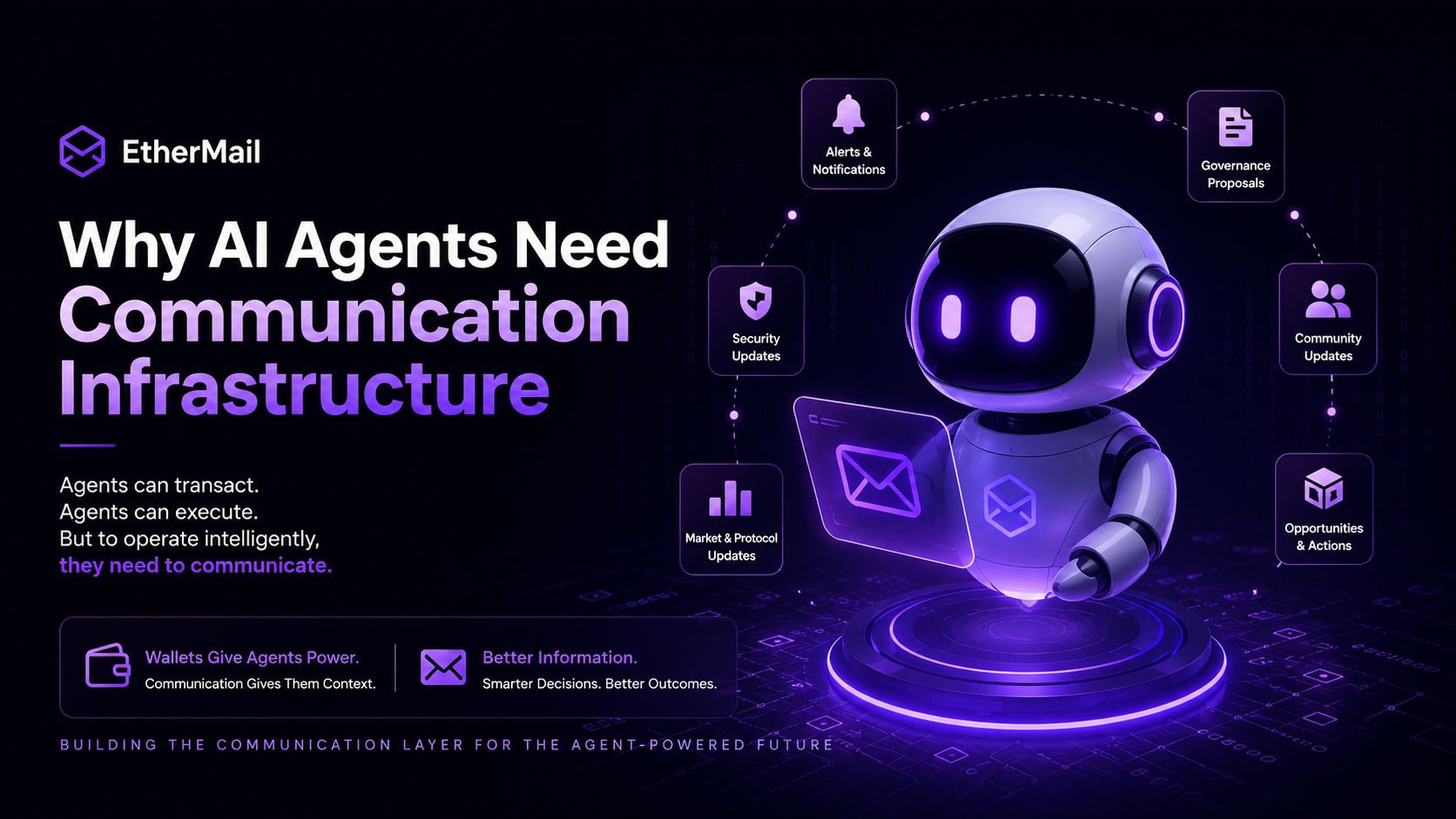
Why do AI agents need communication infrastructure? Explore how autonomous Web3 agents require trusted, relevant, and timely information to make decisions, manage assets, and participate in digital economies.
The Web3 industry is increasingly focused on AI agents.
Every week seems to bring a new announcement. Autonomous trading agents. Research agents. Governance agents. Customer support agents. Personal assistants capable of interacting with blockchains on behalf of users.
Most discussions focus on what these agents can do.
Very few focus on something equally important.
How will they communicate?
AI Agents Are Becoming Economic Actors
The first generation of AI tools primarily generated content.
The next generation is beginning to take action.
AI agents can already analyse markets, monitor on-chain activity, execute predefined tasks, and interact with decentralized applications.
As these systems become more autonomous, they start behaving less like software and more like economic participants.
Many will eventually hold wallets, manage assets, and participate in digital ecosystems.
Once that happens, communication becomes a critical challenge.
Information Is Fuel
Human users rely on communication channels to make decisions.
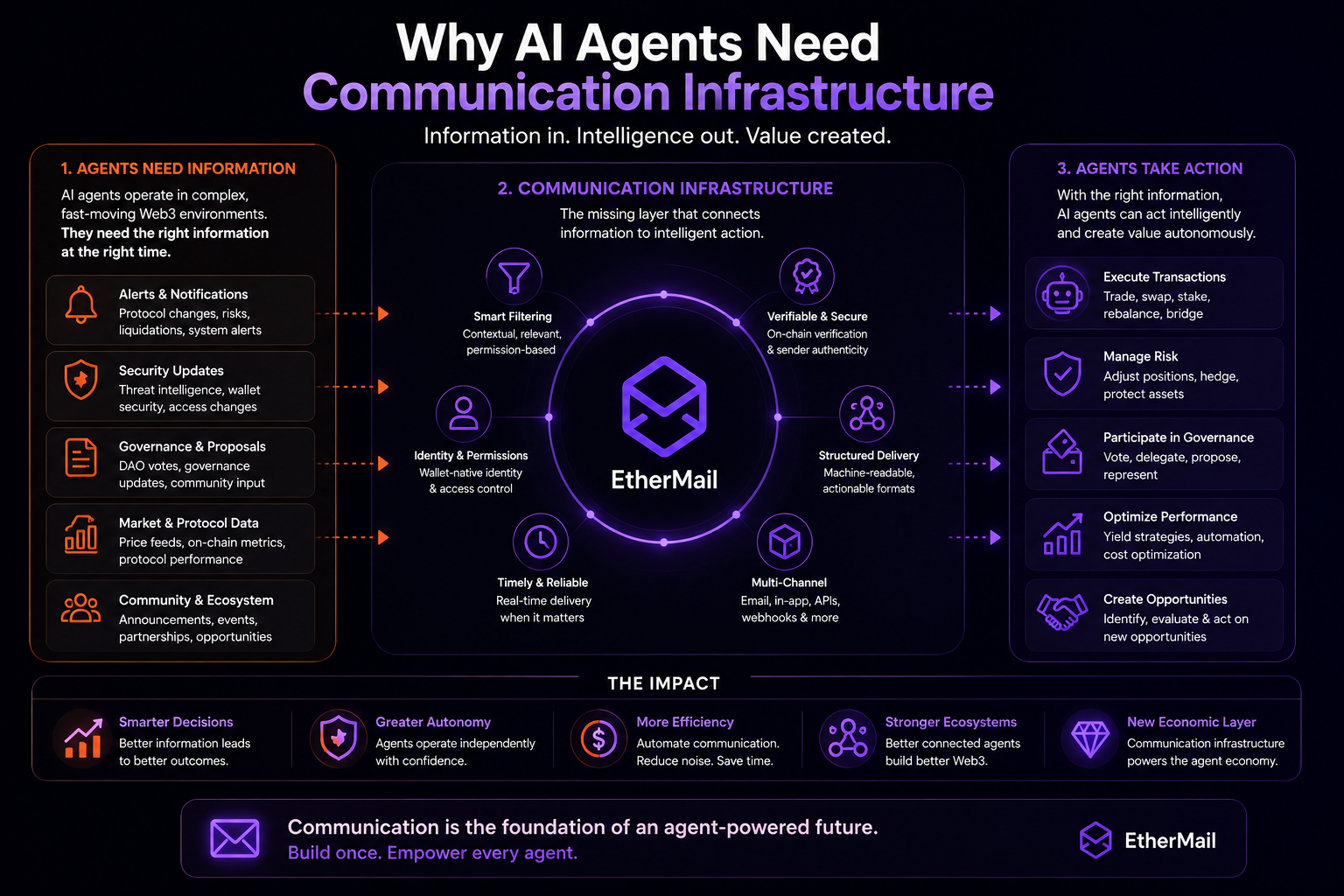
We receive updates, alerts, governance proposals, product announcements, and security notifications.
AI agents require the same inputs.
Without access to relevant information, even the most advanced agent operates with an incomplete picture of its environment.
An agent managing a treasury may need to know about governance changes.
An agent participating in DeFi may need updates regarding protocol risk.
An agent representing a DAO may need awareness of community proposals.
The ability to receive information becomes just as important as the ability to act upon it.
The Missing Layer
Much of the infrastructure required for autonomous agents already exists.
Wallets exist.
Blockchains exist.
Smart contracts exist.
Execution environments exist.
Communication infrastructure remains relatively underdeveloped.
Most systems still assume a human is sitting in front of a screen checking dashboards and notifications.
Autonomous systems require something different.
They need reliable ways to receive relevant information automatically.
From Mass Messaging to Intelligent Delivery
The future will not be built around sending more messages.
It will be built around sending better messages.
An AI agent does not need marketing noise.
It does not need irrelevant notifications.
It needs contextual information connected to its objectives, assets, permissions, and responsibilities.
Communication becomes increasingly valuable when it is filtered, structured, and relevant.
The same principle applies to both humans and machines.
Building for an Agent-Powered Future
Much of today's Web3 infrastructure was designed around human users.
The next phase of growth may require infrastructure designed for both humans and autonomous systems.
As AI agents become active participants within digital economies, communication will become a foundational layer rather than an optional feature.
Agents will need ways to receive information, verify relevance, and respond accordingly.
The projects that begin building this infrastructure today may help define how autonomous economies operate tomorrow.
The future of Web3 may not simply be wallets communicating with people.
It may be wallets communicating with wallets, agents communicating with agents, and entire ecosystems operating through intelligent networks of autonomous participants.
.jpg)